Is Cedar Shake Roofing Good in California?
Key Takeaways
- California roofing decisions must address Class A fire ratings, WUI compliance, and Title 24 energy standards, especially in high wildfire risk zones identified by CAL FIRE.
- Wood shake roofing faces increasing approval, insurance, and long-term cost challenges due to combustibility, maintenance requirements, and stricter California Building Code enforcement.
- Homeowners in Malibu, Pasadena, Napa, Santa Barbara, and the Bay Area must consider insurance eligibility and CRRC cool roof requirements before selecting cedar shake.
- Enviroshake provides a Class A, WUI-compliant roofing solution that preserves authentic cedar aesthetics while meeting modern California fire, energy, and historic approval standards.
Fire Risk, Code Requirements & Rebuilding After Wildfires
In California, a roof does more than complete a home’s design, it plays a critical role in fire protection, energy efficiency, and insurance eligibility. For decades, cedar shake roofing has defined neighborhoods from Pasadena and Santa Barbara to Malibu and the Bay Area. But as wildfire risk intensifies and regulations evolve, homeowners must carefully weigh whether cedar shake remains a practical choice.
In this guide, we break down what homeowners need to know about wood shake roofing in California and how Enviroshake provides a code-aligned alternative.
Fire Risk & Class A Requirements
CAL FIRE identifies large portions of the state as High or Very High Fire Hazard Severity Zones. In these areas, roofing materials are required to meet Class A fire ratings, the highest available standard for flame resistance.
Untreated cedar shake does not qualify for Class A status. Fire-treated shakes may meet the requirement initially, but those chemical treatments must be maintained and can degrade over time, particularly in intense sun and coastal conditions. Fire retardant treatments for cedar wood shakes generally need to be reapplied every 1 to 5 years to maintain effectiveness. The frequency depends heavily on the specific product used, the climate, and UV exposure, with higher frequency treatments (every 1 to 3 years) often recommended in high-humidity or high-risk areas.
For homeowners rebuilding in communities like Malibu, Montecito, Napa, Pasadena, or the East Bay Hills, this creates immense approval challenges with cedar shake.
All Enviroshake products are available with a Class A fire rating, without relying on ongoing chemical retreatment, helping homeowners meet modern code requirements while maintaining the natural cedar aesthetic.
Read a real customer testimonial after experiencing a structural fire with an Enviroshake roof: Quaaout Lodge & Talking Rock Golf Resort
Insurance & Long-Term Cost Considerations
Wildfire losses have reshaped California’s insurance market. In high-risk regions including Santa Barbara, Malibu, Napa, and the Bay Area, homeowners with combustible roofing often face higher premiums, underwriting restrictions, coverage limitations, or coverage refusal. In recent years, insurance companies in California began dropping coverage or refusing to renew policies for homes with wood shake roofs due to the extreme wildfire risks associated with them.
Cedar shake also carries ongoing maintenance expenses, including:
- Frequent and costly fire-retardant reapplications
- Cleaning and moss treatments in coastal climates
- Repairs from splitting, cupping, and UV exposure
- Potentially shorter replacement cycles in extreme heat
When combined with elevated insurance costs, these factors increase the total lifetime investment of a wood shake roof.
Because Enviroshake does not require chemical retreatment for fire performance and is engineered for durability, many homeowners view it as a lower-maintenance, longer-term solution in California’s demanding climate.
Wildland Urban Interface (WUI) Restrictions
Many California homes are located within designated Wildland Urban Interface zones, where development meets undeveloped land. WUI regulations are designed to reduce ignition from embers; one of the leading causes of wildfire-related home loss.
Because cedar is inherently combustible, wood shake roofs often face heightened scrutiny in WUI areas, even when treated. This can complicate approvals in places like Portola Valley, Santa Rosa, Rancho Santa Fe, and parts of Los Angeles County.
Enviroshake products are tested for use in wildfire-prone environments and are suitable for WUI-compliant assemblies, offering a way to achieve regulatory approval without sacrificing architectural character.
Title 24 & Cool Roofing Standards
California’s energy regulations also influence roofing decisions. Title 24 establishes statewide energy-efficiency standards, including Cool Roof requirements in many climate zones.
Compliance is verified through ratings from the Cool Roof Rating Council (CRRC). Traditional cedar shake does not consistently meet required reflectance values without additional treatments.
In cities such as San Francisco, Irvine, Santa Monica, and Long Beach, these energy standards add another layer of complexity to wood shake installation.
Enviroshake’s Envirocool meets reflectivity and performance standards aligned with Title 24 and CRRC requirements in applicable zones, helping homeowners address both fire and energy codes with one roofing system.
Historic Approvals & Architectural Compatibility
Cedar shake is often chosen to preserve the character of Craftsman, Spanish Revival, California Ranch, Storybook, and Mid-Century Modern homes. Historic districts in communities such as Carmel-by-the-Sea, San Marino, Beverly Hills, and Pacific Palisades prioritize maintaining these architectural details.
However, historic appearance must now be balanced with modern code compliance.
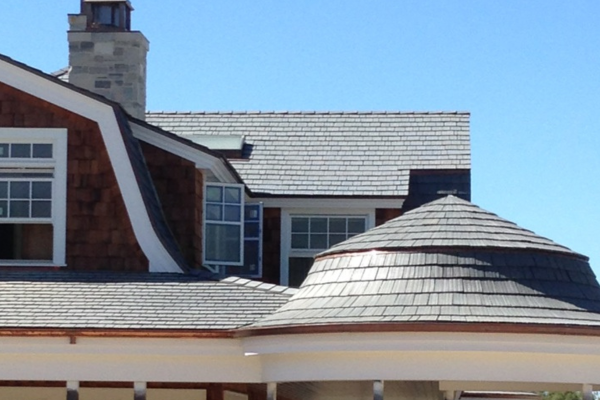
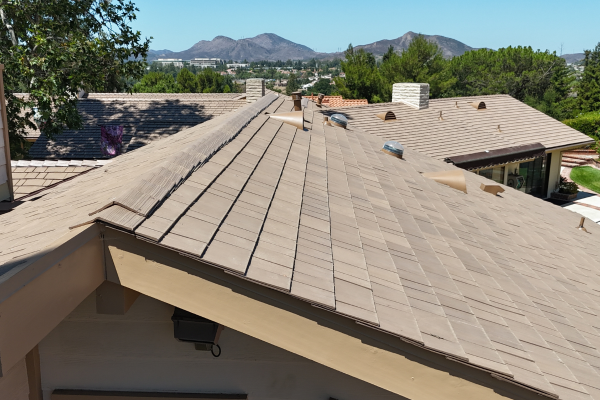
Enviroshake has received approvals in notable California historic settings, including Angel Island (San Francisco National Historic Landmark), The Nature Conservancy on Santa Cruz Island, the First San Diego Courthouse Historic State Park, as well as historic approvals in San Marino and Santa Barbara. These approvals demonstrate that homeowners can preserve authentic wood shake aesthetics while meeting current fire and energy standards.
Making the Right Roofing Decision in California
Wood shake roofing remains visually distinctive and architecturally significant across California. Yet between Class A fire requirements, WUI restrictions, Title 24 energy codes, and evolving insurance underwriting, it has become increasingly difficult to justify purely from a compliance standpoint.
For homeowners rebuilding after wildfires or planning a roof replacement, choosing a roofing system that satisfies fire safety, energy efficiency, and insurance expectations is critical.
Enviroshake delivers the timeless appearance of cedar shake while aligning with California’s modern building standards. Our roofing material helps homeowners protect their homes, preserve their design vision, and build with confidence in a wildfire-prone state.
Resources:
Frequently Asked Questions for California Homeowners
- Can cedar shake roofs meet Class A fire rating?
Untreated cedar shake does not meet a Class A fire rating. Some fire-treated shakes can qualify as part of a tested assembly, but performance may diminish over time. Enviroshake systems are designed to achieve a Class A rating without chemical retreatment. - Do insurance companies cover cedar shake roofs?
Coverage depends on location and carrier. In high wildfire-risk areas, insurers may charge higher premiums, limit coverage, or require roof replacement. Class A-rated alternatives like Enviroshake may help reduce underwriting concerns. - What roofing materials meet WUI requirements?
WUI areas require roofing assemblies tested for ember and flame resistance, typically with a Class A rating. Untreated, and even some fire-treated cedar rarely qualifies. Enviroshake can be installed as part of WUI-compliant assemblies. - Does cedar shake meet California Title 24 energy efficiency standards?
Title 24 sets Cool Roof requirements in many climate zones. Traditional cedar shake does not consistently meet reflectivity standards without treatment. Enviroshake can align with Title 24 performance requirements where applicable. - How long does cedar shake roofing last in California’s climate?
Cedar shake roofs realistically last 10-15 years, with performance and appearance solely dependent on proper installation and consistent maintenance. UV radiation and moisture can accelerate wear. Enviroshake is engineered for longer-term durability with a 50-year warranty available and reduced maintenance needs.