What Is Roofing Underlayment, and Which Type Is Best?
Key Takeaways
- Roofing underlayment is a secondary water barrier installed over the roof deck, beneath the shingles, shakes or slate.
- The three main types are asphalt-saturated felt, mechanically fastened synthetic sheets and peel-and-stick membranes.
- Peel-and-stick membranes bond to the deck and seal around properly installed nails, offering stronger protection against water intrusion than felt or fastened synthetic sheets.
- Installation matters as much as the material: a clean, dry deck, proper overlaps and careful flashing details all affect performance.
- Enviroshield peel-and-stick synthetic underlayment is included in every Enviroshake quote and required for the 50-year Gold-Level Warranty.
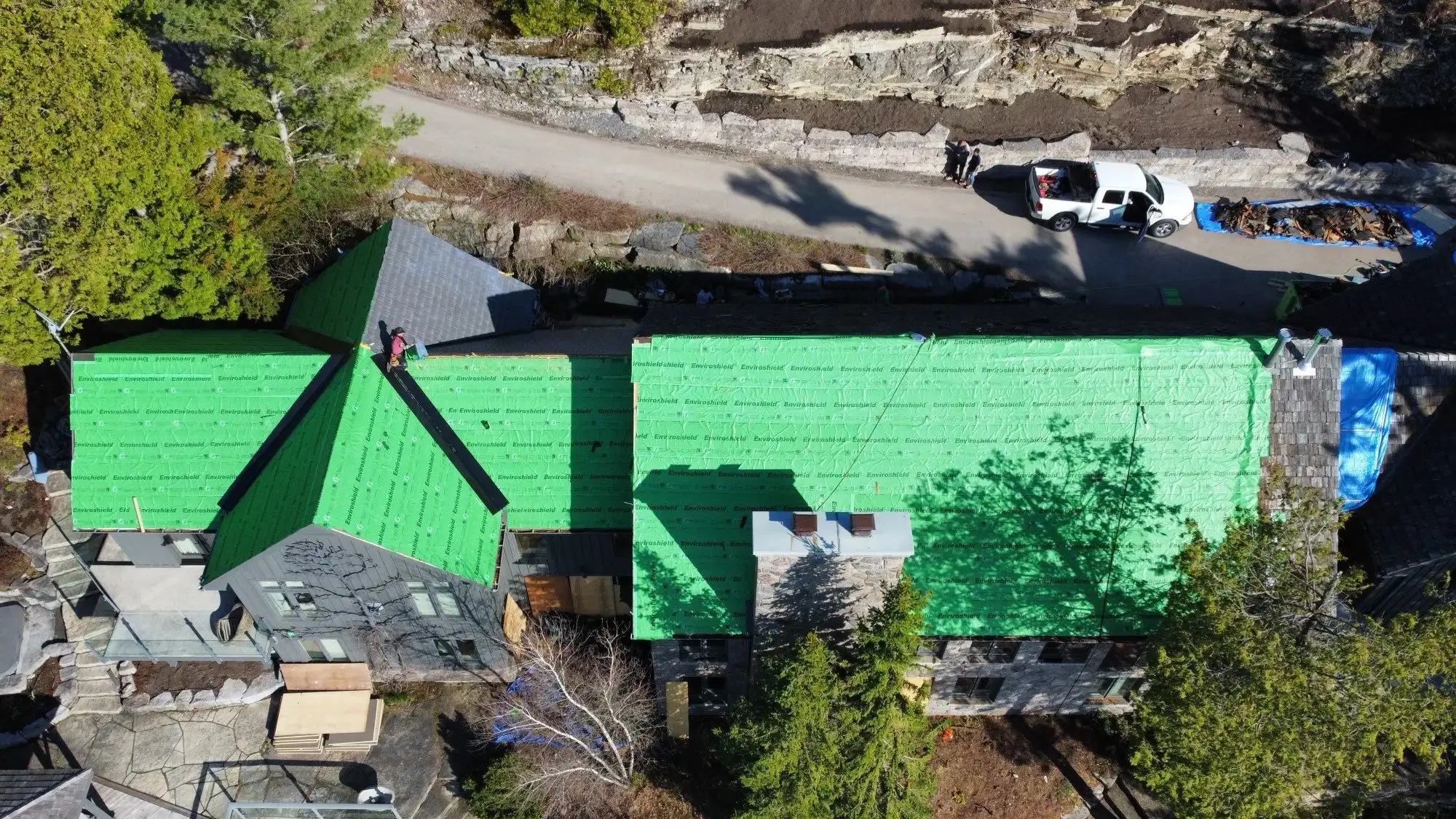
When choosing a new roof, homeowners often focus on the material, color, and texture, considering how each will complement the architecture of their home. Beneath the finished surface, underlayment plays an equally practical role, helping protect the roof deck from water that gets past the shingles or shakes.
The choice of underlayment deserves attention early in the project, when homeowners can compare materials and understand the protection included in their roofing quote.
What is roofing underlayment?
Roofing underlayment is a protective layer installed over the roof deck, beneath the shingles, shakes, slate, or other roof covering. It provides a secondary barrier against water reaching the wood structure below.
Most rain drains over the outer roofing material, but wind can drive water beneath overlapping shingles or shakes. Underlayment helps protect the deck when water gets underneath, working with flashing to manage drainage around roof edges, valleys, chimneys, and skylights.
Why the layer beneath your roofing matters
Underlayment helps reduce the risk of leaks, wood deterioration, and damage inside the home. Because moisture beneath a roof can remain hidden, a small opening may allow repeated water exposure long before a stain appears on the ceiling.
Protecting the deck also helps preserve the roof above it. If the wood sheathing deteriorates, repairs can require removing roofing materials to reach the damaged area, adding expense and disruption. A durable, properly installed underlayment helps protect the structure supporting the finished roof, giving homeowners another layer of protection during severe weather and everyday exposure.
The different types of roofing underlayment
Felt, synthetic sheets, and peel-and-stick membranes are the main options homeowners will encounter. Each provides protection beneath the roofing, with differences in durability and how the material attaches to the deck.
Asphalt-saturated felt
Felt is a traditional, water-resistant underlayment, commonly available in No. 15 and No. 30 grades. It remains an economical option for suitable roofing systems, although conventional felt can absorb moisture, wrinkle, and tear more easily than higher-quality synthetic materials.
Mechanically fastened synthetic underlayment
Synthetic sheets use polymer-based materials to create a lightweight, water-resistant layer, generally with better tear resistance than conventional felt. Installers secure the sheets with specified fasteners, often cap nails.
The stronger material offers advantages during installation, but conventional mechanically fastened sheets do not seal around nail holes. Their protection depends on proper fastening, overlaps, and careful handling.
Peel-and-stick underlayment
Peel-and-stick underlayment bonds directly to the prepared roof deck, creating an adhered barrier beneath the roofing. Suitable membranes also seal around properly installed roofing nails, helping protect potential water entry points.
Some peel-and-stick products, including Enviroshield, combine a synthetic membrane with an adhesive backing. “Synthetic” describes the material, while “peel-and-stick” describes how the membrane attaches to the roof.
Comparing roofing underlayment types
| Quality | Peel-and-Stick Synthetic (Enviroshield) | Mechanically Fastened Synthetic | Asphalt-Saturated Felt |
|---|---|---|---|
| Material | Synthetic membrane with an adhesive backing | Polymer-based synthetic sheet | Traditional asphalt-saturated felt, commonly No. 15 or No. 30 |
| How it attaches | Bonds directly to the prepared roof deck | Secured with specified fasteners, often cap nails | Fastened to the roof deck |
| Water protection | Adhered barrier restricts water from traveling underneath | Water-resistant, but does not form a sealed waterproof barrier | Water-resistant |
| Around nail holes | Seals around properly installed roofing nails | Does not seal around nail holes | Does not seal around nail holes |
| Durability | Durable synthetic construction | Generally better tear resistance than felt | Can absorb moisture, wrinkle and tear more easily |
| If the outer roof is damaged | An intact, adhered membrane can help limit water entry | Protection depends on fastening, overlaps and careful handling | Protection depends on fastening, overlaps and careful handling |
| Best suited to | Premium roofs; required for Enviroshake's Gold-Level Warranty | Projects wanting a stronger, lighter alternative to felt | Budget-conscious projects on suitable roofing systems |
The performance advantages of peel-and-stick underlayment
High-quality peel-and-stick underlayment generally offers stronger protection against water intrusion than conventional felt or mechanically fastened synthetic sheets, when approved for the roofing system.
Bonding the membrane to the deck helps restrict water from traveling underneath it, while its ability to seal around properly installed nails adds protection at fastener penetrations. An intact, properly adhered membrane can also help limit water entry if a storm damages or dislodges part of the outer roof covering.
Installation remains essential to performance. A clean, dry deck and properly formed overlaps help the membrane adhere securely, while careful flashing details direct water away from vulnerable areas. The installer should also confirm that the roof’s ventilation and moisture-control design suits the selected membrane.
Enviroshield as part of a complete Enviroshake roof
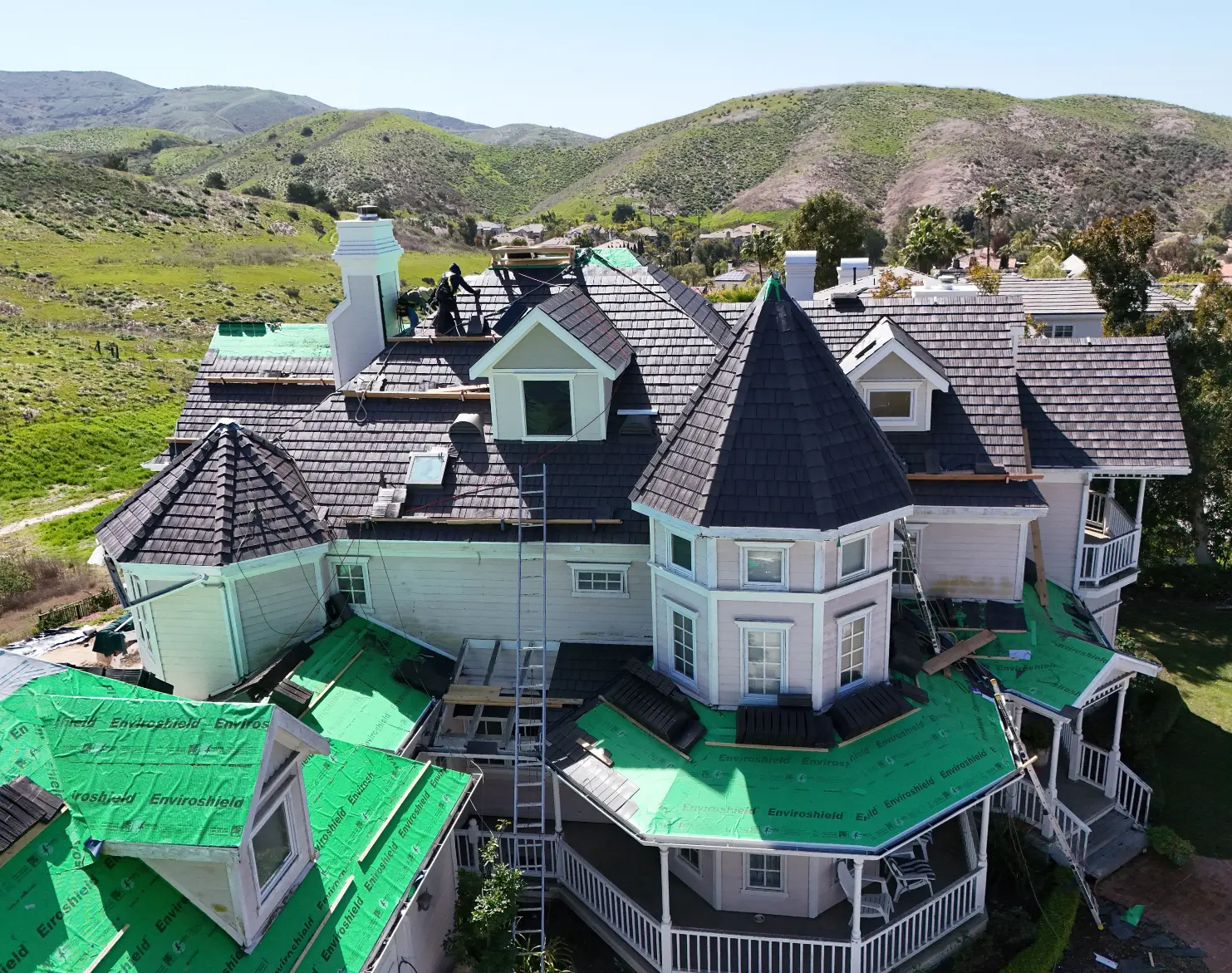
Enviroshake uses Enviroshield peel-and-stick synthetic underlayment to provide an adhered water barrier beneath its composite roofing. The combination of durable synthetic construction and adhesion to the deck supports the long-term protection homeowners expect from a premium roof.
Enviroshield is factored into every Enviroshake quote, bringing the underlayment into the project from the outset. Homeowners can review the roofing package with a clear understanding of the materials included, while confirming the components required for Gold-Level Warranty coverage.
For a roof designed to preserve the character of a home for years to come, the protection beneath the surface deserves the same consideration as the roofing above it.
Roofing underlayment FAQs
Can asphalt shingles be installed directly on the roof deck?
Asphalt shingles should have an appropriate underlayment beneath them. Installing shingles over bare wood removes the secondary water barrier and can conflict with applicable codes or manufacturer installation requirements.
Is synthetic roofing underlayment waterproof?
Conventional mechanically fastened synthetic sheets are water-resistant, but do not form a sealed waterproof barrier. Self-adhered waterproofing membranes offer stronger water protection when correctly installed and integrated with flashing.
Can underlayment protect a roof after storm damage?
An intact, properly installed underlayment can help limit water intrusion if the outer roofing becomes damaged or dislodged. The roof should still receive prompt professional assessment and repair.
Is Enviroshield included in an Enviroshake quote?
Yes. Enviroshield is factored into every Enviroshake quote, helping homeowners compare the complete roofing package, including the underlayment beneath the visible shakes, shingles, or slate.
Is Enviroshield required for Enviroshake’s 50-year warranty?
Yes. Enviroshield is required for Enviroshake’s Gold-Level Limited Lifetime Warranty, which provides 50 years of coverage subject to the written terms. Installation by a Factory Trained Enviroshake Installer and the applicable installation and registration requirements also apply.
Contact the Enviroshake team to discuss underlayment, installation, and a complete roofing quote for your home.
Interested in learning more about Enviroshake products?
Contact us today to discuss your project and how we can help you achieve your design goals.